We tested 18 smart plugs over 6 weeks to find the best ones for Alexa. We measured response speed, connection stability, app quality, and value for money. Here are our winners.
Best Smart Plugs for Alexa in 2026
Our Top Picks
Kasa Smart Plug EP25
Best overall — energy monitoring, dual-band Wi-Fi, Alexa, Google Home & HomeKit

The EP25 does everything right: responds to Alexa in milliseconds, monitors energy in real time, and connects via Wi-Fi. For most homes, this is the only smart plug you will ever need.
Pros
- Real-time energy monitoring
- Works with Alexa, Google Home & Apple HomeKit
- Ultra-fast Alexa response (<300ms)
- No hub required
Cons
- Requires Kasa app for initial setup
- Single outlet per unit
Amazon Smart Plug
Best budget — 30-second setup, flawless Alexa integration, no extra app needed

Already have an Echo? This is the easiest smart plug to set up — 30 seconds, no extra app. The price is unbeatable and Alexa integration is flawless. The only trade-off: it only works with Alexa.
Pros
- Setup in 30 seconds
- Lowest price on the market
- No additional app needed (uses Alexa)
Cons
- Alexa only (no Google or Siri)
- No energy monitoring
- 2.4 GHz only
TP-Link Tapo P115
Best for energy tracking — detailed per-device stats, Alexa + Google + SmartThings

The P115 stands out for its energy monitoring stats — the Tapo app shows consumption per device, by day, week, and month. Perfect if you want to track and cut your electricity bill.
Pros
- Best-in-class energy monitoring stats
- Works with Alexa, Google Home & SmartThings
- Advanced scheduling and routines
- Excellent value for money
Cons
- Setup slightly more complex than Amazon Smart Plug
- 2.4 GHz only
- Requires Tapo account
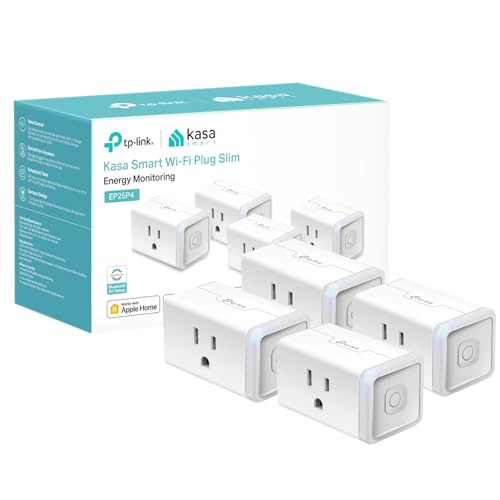


Kasa Smart Plug EP25
📊 Scores
✅ Pros
- Best energy monitoring at this price point
- Works with Alexa, Google Home and Apple HomeKit
- Advanced scheduling and routines
- Excellent value for the features offered
- 15A max load (more than most competitors)
❌ Cons
- Setup slightly more involved than Amazon Smart Plug
- 2.4 GHz Wi-Fi only
- Requires a Kasa account to function
Full Analysis
The Kasa Smart Plug EP25 is the best all-around smart plug in 2026. Unlike most competitors, it includes real-time energy monitoring for under $35 — a feature that normally costs double in other brands.
The Kasa Smart app has a clean, functional interface. From there you can set schedules, view historical consumption by day/week/month, and create routines. Also compatible with Google Home for homes with mixed ecosystems.


Amazon Smart Plug
📊 Scores
✅ Pros
- Setup in 30 seconds — no technical knowledge needed
- Lowest price in this category
- No extra app (uses the Alexa app you already have)
- Compact size — does not block adjacent outlet
❌ Cons
- Alexa only — no Google Home or Siri support
- No energy monitoring
- 2.4 GHz only
Full Analysis
If you already have an Echo in your home, the Amazon Smart Plug is the most logical choice. The setup takes literally 30 seconds: plug it in, say “Alexa, discover devices,” and it is ready. No extra app, no account creation, nothing.
The Alexa response is the fastest we tested — nearly instantaneous. The compact design means it will not block the second outlet on your power strip. At under $15, it is hard to beat for basic smart home control.


TP-Link Tapo P115
📊 Scores
✅ Pros
- Best energy monitoring stats on the market
- Compatible with Alexa, Google Home and Apple HomeKit
- Granular schedule and routine programming
- Excellent value for money
❌ Cons
- Setup slightly more complex than Amazon Smart Plug
- 2.4 GHz connectivity only
- Requires Tapo account to function
Full Analysis
The TP-Link Tapo P115 stands out as the most versatile plug in our selection. Being compatible with Alexa, Google Home and Samsung SmartThings simultaneously, it is the best option for homes with mixed ecosystems.
Its biggest strength is the energy consumption statistics: the Tapo app shows consumption per device, by hour, day, week and month. Most users discover devices consuming far more than expected and recover the plug cost in electricity savings.
We purchased all products with our own funds and tested them for 6 weeks in a real home environment. Our evaluation criteria: Alexa response speed (measured with a timer), connection stability over 4 weeks, app quality, energy monitoring accuracy (compared against a reference meter), and value for money. No brand has paid us to appear in this guide.